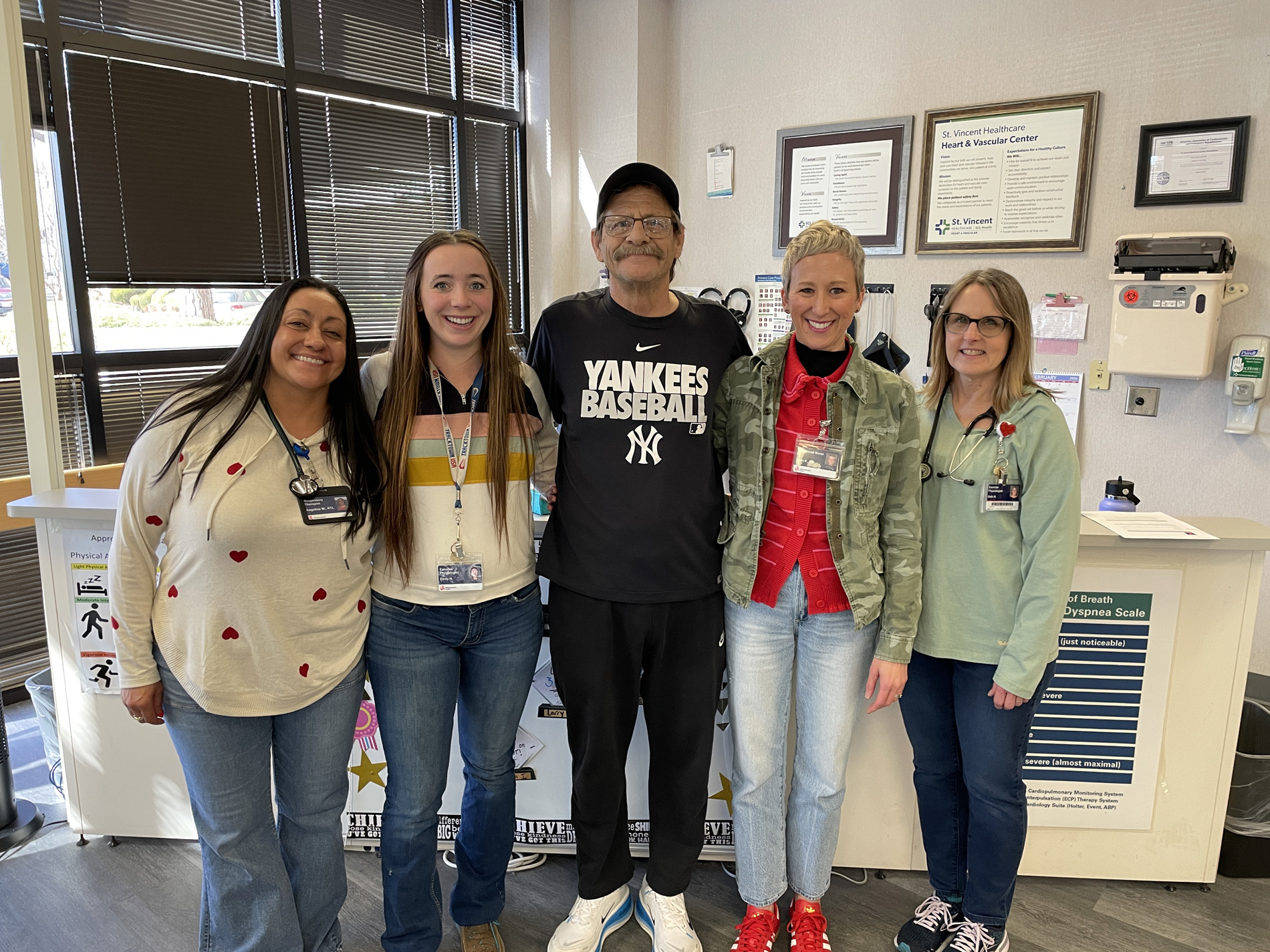
Heart Attack Survivor Joins Intermountain Health to Raise Awareness of Heart Health and CPR
Industry: Healthcare
Billings man partners with Intermountain Health to raise awareness about heart Health and importance of CPR after surviving cardiac arrest
Billings, MT (PRUnderground) February 27th, 2026

Billings, Montana man Larry Schlepp was visiting his daughter and grandchildren when an ordinary Sunday morning became one they would never forget.
“My parents had come up to Great Falls for my son’s football game, and we were having breakfast on Sunday morning,” said Carrie Etcheberry. “My dad was sitting on the couch and made an unusual gurgling sound, like he was clearing his throat. I looked over and he was not responsive.”
Etcheberry, a nurse in Great Falls who is trained in CPR, sprang into action.
“My son and husband helped me get him off the couch and onto the floor, and I just started CPR,” she said. “It was an out-of-body experience. You never expect to be doing it on your own family member.”
She called to her daughter to get a friend and neighbor, who is also a health professional, to assist with CPR until first responders arrived.
When the fire department arrived, they continued CPR and then used an Automated External Defibrillator (AED) to revive Schlepp.
An AED is a small, portable machine that can help save someone’s life if their heart suddenly stops working properly. The device checks a person’s heart rhythm and, if needed, delivers an electric shock to help restore a normal heartbeat. Schlepp was then taken to the hospital in Great Falls, where he was stabilized.
At the hospital, doctors determined Schlepp had suffered a cardiac arrest due to a dangerous change in his heart rhythm, which affected his heart’s ability to pump blood normally.
He required the immediate implantation of a defibrillator device to reduce the risk of another sudden cardiac arrest.
In these cases, a small, battery-powered device is placed under the skin and connected to the heart with thin wires. The device continuously monitors the heart’s rhythm and provides an electric shock or signal if a dangerous rhythm occurs.
After spending several days in the hospital following the procedure, Schlepp was ready to begin his recovery at home in Billings.
This was not Schlepp’s first heart scare.
He suffered a heart attack in 2013 that required open-heart surgery at Intermountain Health St. Vincent Regional Hospital. Fortunately, he was able to rely on the same care team at St. Vincent to help him recover.
The next step in Schlepp’s recovery was participating in the cardiac rehabilitation program at St. Vincent. The program guides heart patients through a graduated plan over several weeks to rebuild strength and stamina, improve quality of life, and return to normal activities.
“My first day in rehab, I walked in and said, ‘This place looks pretty familiar,’” Schlepp joked. “Then Mandy (Frickle, the cardiac rehab program coordinator), stood up, greeted me, and said, ‘I remember you.’ The cardiac rehab team is phenomenal in how they treat people. They help get you back to where you want to be.”
In addition to rehabilitation, Schlepp received coordinated care from the cardiology team at Intermountain St. Vincent Hospital.
Further testing revealed he was still experiencing heart arrhythmia that needed correction. He underwent a cardioversion procedure to restore a normal heart rhythm.
During this procedure, the heart team delivers a quick, low-energy shock to the chest using patches to reset the heart’s electrical system and restore normal rhythm.
“Conditions like heart failure or arrhythmias often develop gradually, making it important to pay attention to subtle warning signs that can lead to serious conditions,” said Joe Apostol, MD, an interventional cardiologist at Intermountain Health in Billings. “Feeling unusually tired or weak, being unable to complete daily activities, or experiencing dizziness, lightheadedness, or fainting spells can occur when the heart isn’t functioning normally.”
Five months after that fateful morning, Schlepp and his daughter reflected on all they have been through.
“He has worked really hard in cardiac rehab,” Etcheberry said. “We are so happy he is still here. He has been through so many life-altering and life-saving experiences.”
She is also grateful she had received CPR training and encourages others to seek it out.
“It is such a valuable set of skills to have,” she said. “There is so much evidence showing how chest compressions keep blood flowing to the heart. It only takes a couple of hours to learn, and you never know when a family member or friend may need it.”
Schlepp does not take for granted what his daughter did for him.
“I feel very, very lucky,” he said. “It’s hard to put it into words. If this had happened anywhere else, I would have died. Words don’t even describe how I feel about her.”
About Intermountain Health
Headquartered in Utah with locations in six states and additional operations across the western U.S., Intermountain Health is a nonprofit system of 34 hospitals, approximately 400 clinics, medical groups with some 4,600 employed physicians and advanced care providers, a nonprofit health plan called Select Health with more than one million members, and other health services. Helping people live the healthiest lives possible, Intermountain is committed to improving community health and is widely recognized as a leader in transforming healthcare by using evidence-based best practices to consistently deliver high-quality outcomes at sustainable costs. For up-to-date information and announcements, please see the Intermountain Health newsroom at https://news.intermountainhealth.org/. For more information, see intermountainhealth.org/ or call 801-442-2000.