Intermountain Health Transplant Program Eclipses 500 Organ Transplant Milestone in 2025
Industry: Healthcare
Utah Medical First: Intermountain Health Transplant Program Eclipses 500 Organ Transplant Milestone in 2025 as Patients and Staff Celebrate Lives Saved
Salt Lake City, UT (PRUnderground) January 27th, 2026

For the first time in Utah medical history, a Utah transplant program successfully performed more than 500 organ transplants in a single year, saving hundreds of lives and achieving a new medical milestone for organ transplantation in the Beehive State.
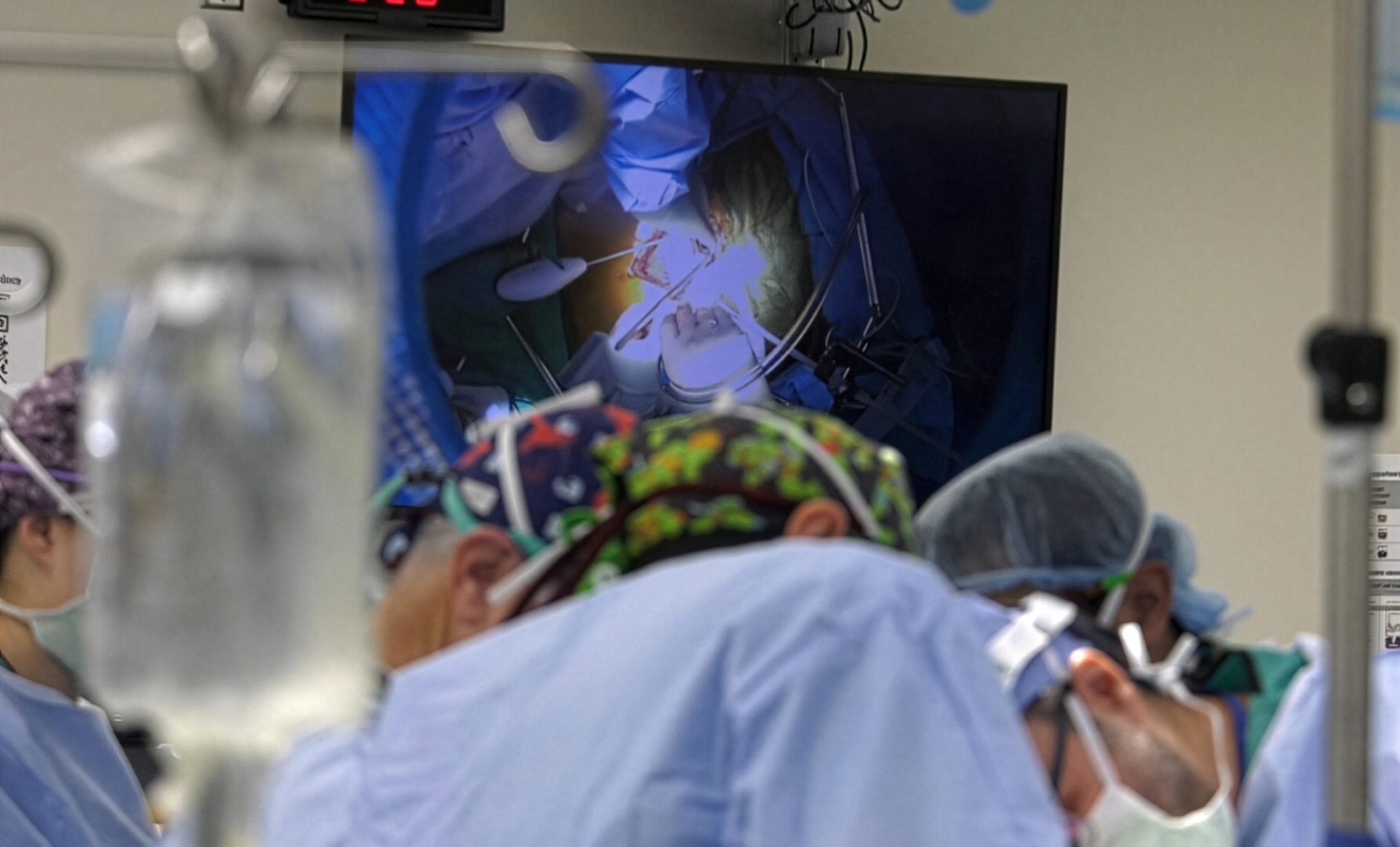
The Intermountain Health Transplant Program at Intermountain Medical Center in Murray performed 515 organ transplants last year, shattering their previous record of 489 transplants performed in 2024, and surpassing the 500-transplant milestone for the first time in Utah history.
Transplant recipients, living organ donors, and family members from throughout the state, joined with surgeons and medical staff from the Intermountain Health Transplant Program on Tuesday to celebrate this life-saving medical milestone, as well as to recognize and thank donors and families for the ultimate gift of life.
As part of the celebration, the Intermountain Health Transplant Program unveiled a special display commemorating the lifesaving 515 transplants performed in 2025 – a six-foot clear obelisk filled with 515 colored ping-pong balls representing all the transplants performed by the team last year.
“It’s an honor to join with our patients and our transplant team today to celebrate this milestone because each transplant that we perform represents a life saved and life improved – and that means everything to us,” said Jean Botha, MD, transplant surgeon and medical director of Intermountain Health Transplant Program.
During the past four decades, the Intermountain Transplant Program has grown into a national model and is recognized as a national center of excellence. The abdominal transplant program is ranked among the top five programs in the nation for low transplant wait times and excellent patient outcomes.
2025 is the sixth consecutive year that the Intermountain Health Transplant Program has performed a record-breaking number of adult transplants for patients in Utah and the Intermountain West.
“This is a remarkable testament to the work this team has done to assure that our patients are getting timely transplants, and their lives are blessed so they can go forward in the future with their family, children, parents, and friends – and continue to live a healthy life,” said Rob Allen, president and CEO of Intermountain Health. “The Intermountain Health Transplant Program is a prime example of living our mission to help people live the healthiest lives possible. I’m proud of the team and this important accomplishment to serve our patients.”
In 2025, the Intermountain Transplant Program performed:
- 256 kidney and kidney-pancreas transplants
- 227 liver transplants
- 32 heart transplants
“We are partners in our patient’s health, collaborating to keep people well and enjoying their best lives,” said Dr. Botha. “The Intermountain Transplant Program is highly successful because of our innovation and dedication of our multi-disciplinary team. We say, ‘Yes’ more often – including to patients with very complex health issues – where other transplant programs have said, ‘No.’ This allows us to get our patients back to their families living their best possible lives.”
One of those patients is Erin Barker of Holladay, Utah.
Barker received her life-saving heart transplant at Intermountain Medical Center on Feb. 14, 2025 – Valentine’s Day.
“I love telling people I received my heart on Valentine’s Day, because I really did,” she said with a laugh. “I went from being an active mom of four who competed in 5K races in August 2024 to being bedridden and not able to take care of my children by Halloween, likely due to a viral infection in my heart.”
At the time of being placed on the organ transplant list, Barker’s heart was barely functioning, pumping at just 11 percent of capacity.
“I can’t sing the praises of the transplant team and all the caregivers at Intermountain Medical Center enough,” Barker said. “Because my illness came on so suddenly, I didn’t have years of heart troubles to slowly prepare me for this eventuality, so when it hit it was like being dropped into the frying pan. They were so kind and caring to me and my family during that time.”
Barker said she’s so thankful for organ donation and her donor, who gave her the gift of life.
“I want everyone to know that you don’t just save a life with a donation, you save a family,” she said. “We were staring down the very real possibility of my little kids – ages 2, 4, 6 and 9 – being raised motherless. Thanks to my donor, my children have their mom. I am so thankful and grateful. It’s a gift I will never take for granted.”
Liver transplant recipient, Amy Baird, who lives in Hoytsville, Utah, agrees.
She received her liver transplant at Intermountain Medical Center on Dec 21, 2025, due to Stage 4 liver cirrhosis, which was caused by a condition known as metabolic dysfunction associated steatohepatitis or MASH – a serious, progressive liver disease caused by excess fat accumulation leading to inflammation and liver cell damage.
“It’s amazing how good I feel today,” she said. “The transplant has dramatically improved the quality of my life. I feel incredibly grateful for a second chance at life and am so thankful to my donor and to the Intermountain transplant team for saving my life.”
Across the country, 103,000 people are currently on the transplant list, waiting for a kidney, liver, pancreas, heart or lungs. Every nine minutes another person is added to the wait list. In Utah, 885 people are on that waiting list.
Ofelia Murillo of Highland, Utah, was one of those who stepped up when a friend of hers needed a donor kidney last September.
Murillo donated a kidney at Intermountain Medical Center on September 25, 2025.
“A friend of mine needed a kidney and was losing hope as his health worsened,” she said. “He was on dialysis every day and was quite miserable. I want people to know that we can do more to help than we realize. Organ donation is a win-win for everyone involved. It is also important to stay informed in case we or a loved one ever face similar circumstances.”
Today, Murillo says she feels great and is thankful for the opportunity to be an organ donor to help save lives.
“I feel great, and my health is excellent,” she said. “Honestly, since recovering from surgery, I haven’t noticed any difference in how I feel compared to before the procedure. I have four marks on my stomach that remind me every day that two people got a second chance because I said yes to organ donation. Nothing brings me more joy than that.”
“It’s exciting and rewarding to be part of a heart program where we have 100% patient survival rate at three years post-heart transplant, which is among the best in the country,” said Rami Alharethi, MD, medical director of the Intermountain Heart Transplant and Artificial Heart Program at Intermountain Medical Center.
Intermountain is also considered a leading program nationally in the Kidney for Life Program – transplanting exceptionally well-matched living kidney donors from a national pool.
The National Kidney Registry has named Intermountain Health’s Transplant program as the top Kidney for Life program in the United States for successfully matching kidney donors to patients in need of a life-saving kidney transplant using Eplet matching.
“Using this technology, we are able to provide the best option for our kidney transplant recipients,” said Donald Morris, MD, Intermountain Health kidney transplant medical director. “When a kidney is well matched, it should last longer with fewer side effects, fewer complications, and lower risk for rejection. We’re a national leader in this area.”
To learn more about organ donation or register to become an organ donor, go to intermountainhealthcare.org/donatelife.
NOTE TO MEDIA: Images and video available upon request.
About Intermountain Health
Headquartered in Utah with locations in six states and additional operations across the western U.S., Intermountain Health is a nonprofit system of 34 hospitals, approximately 400 clinics, medical groups with some 4,600 employed physicians and advanced care providers, a nonprofit health plan called Select Health with more than one million members, and other health services. Helping people live the healthiest lives possible, Intermountain is committed to improving community health and is widely recognized as a leader in transforming healthcare by using evidence-based best practices to consistently deliver high-quality outcomes at sustainable costs. For up-to-date information and announcements, please see the Intermountain Health newsroom at https://news.intermountainhealth.org/. For more information, see intermountainhealth.org/ or call 801-442-2000.